Saturday, February 25, 2017

Independent Reading in place, Small groups formed, Now what?

I began my blog to share ideas about how I made the most out of small group instruction by using data to plan instruction, gathering materials for setting up the classroom environment, and establishing routines.  My hope is to give others ideas and to help others realize they are not alone.  I then wandered what next?  I realized that not only is small group instruction important to me, but making sure students read and understand what they read.  So I thought,  how could I share my love for books and help teachers use them to teach content.

So now what?

I soon focused on using small groups and books for not only Reading instruction, but for multiple purposes such as:

  •  I choose vocabulary that fit spelling patterns listed in the TEKS.
  •  I developed writing prompts according to unit of study
  •  I taught Grammar skills listed in TEKS
  •  I found creative ways to create Mathematical word problems
  •  I found creative ways to apply Science and Social studies content to the text
I utilized lots of graphic organizers and foldables as the tool in which to record responses.  The students seemed to attend more to their reading.  Small groups became very interactive.


Here are my favorite books that allowed me to teach various skills and content material, while modeling reading reading behaviors. I find books that fit the topic of units of study and use during reading block, or during time of subject area is to be taught.  I wrote comprehension activities that fit not only Reading but other subject areas as well.  


These books have strong story lines and characters that are great for teaching higher order reading skills, promoting critical thinking, synthesizing and analysis through written and oral format.  

 Now that I have been teaching almost 17 years,  I have  become accustomed to monitoring and adjusting my teaching style.  I really love Reading so I began to create comprehension packets based off my favorite books.  I love to read books and  develop comprehension activities that hit all subject areas.


Stay tuned! I plan to work on fine tuning some of my favorite comprehension packets to upload to the site.

Meanwhile,  What are you struggling with as a beginning teacher?  Do you know parents of a students that struggle?  What would you like to read about?


Saturday, February 18, 2017

So How do I insure Independent Readers is taking place?

           
I  created  my blog to share my love of reading, to give tips or suggestions on how to be a more effective reading teacher but mostly to help new teachers. I don't claim to know it all or that my ideas are better than the next.  I just remember when I first started teaching,  I was clueless to the realities of being in the classroom. The things they taught me in college didn't truly  prepare me for teaching.  It provided me with a lot of pedagogy and cute ideas that I couldn't readily use.  You come out all excited and ready to change the world, little did I know just how much more it was to teaching.

I had to Pump the brakes, breath, and began studying again. That means studying the curriculum, going to professional development and reading books like the ones I suggested in my second blog post. I did this for each unit, every subject, every year.  I would study the curriculum, the TEKS and the data in order to be better at planning and implementing instruction.


These books helped me to be a better reading teacher, I read them every Summer:


However, the one thing I had trouble with was time. I would go over my 10 minute mini lesson because I wanted to make sure everyone understood the lesson. My ten minute lesson turned into 30 minutes, leaving no time to pull groups or confer with Readers.  It took me a few years to remember to use my small groups to  teach deeply. This was a struggle for me. So, I got a timer. Guess what?  I never stuck to it.  I had to step back. So, one thing I started doing was keep a reflection journal about my day.  I realized how much time I was not using efficiently and made a conscious effort to adhere to the timer. Things begin to flow better and I was being more productive.   I found that every year I went through the same process.  It soon became automatic.


The next hurdle was getting use to the multiple levels of students I had within one class. That is when I really realized how important  small group instruction was to my student success.  I would study my data constantly, so that I could not only be more effective but efficient in my planning and pulling my groups. Once I got my small groups together I looked at what students were doing while I was with small groups.


INDEPENDENT READING:

As  Reading teacher, I realized that my students weren't necessarily reading at home daily as  I expected.  We talked bout the importance of Reading and how the only way they would get better at reading was by reading and monitoring their understanding of that reading.  Once I realized through analyzing Reading Logs this wasn't  happening.  I made sure to make it happened in class.  Students were shocked when they were reading Science or Social Studies text that I had them record the reading on their Reading Logs.  Being self contained,  I needed them to realize reading was not just happening during the Reading block.

One way I drew students attention to their Reading behaviors was through the use of partner reading. Let me first say, "Yes, I believe in student choice."  However, I was trying to introduce Independent Reading to the students So in order to model what Independent reading looked like and didn't look like I started with creating reading partners.  I would supply the books for students to choose.  The book selection would match the Genre of study at the time, and I would purposely place 2 copies of the same book in the pile or 2 books by the same author.  Once students chose their books, they were instructed to find others with the same book or author depend on which way I chose books.  My intention was for students to discuss why they chose the book and introduce them to their reading partners.

My Independent Reading started similar to book clubs.  The Partners would:

1.  They decided on how many pages they would read what they would focus on:
                Character Development, Story Elements, Theme, Asking questions, etc.
2.  They decide on how they would monitor their understanding
                sticky notes, create a journal, or blog post
3.  They decided on a meeting date to discuss the books (using  a copy of a calendar)
4.  As a class we would create and sign a class Constitution that stated what we as readers would do.

I often added activities or projects to the calendars to assess and monitor use of skills introduced through mini lessons or in small group.  Students  do response projects on their own and tun in by due date on calendar.. Here is one of the boards I created for my character unit.

The projects are projects we have done before so students know where all of the materials are located. This allowed me to set up and model expectations when they are not reading the same books.

So what are the rest of the students doing while I pull small groups?  They are reading, exchanging books, discussing books or working on projects.   The key is to make sure the routine is modeled,  practiced  and posted.  The students in my class know the expectations especially the number one rule:  "We don't interrupt the teacher during small groups."

Are you wondering:

What students do if they need teacher assistance? 
   3 The rule before me is in place.  If they can't help, then students put the red stop light symbol on their          number on the parking lot board.  Students know to work on something else until I get a moment.

 Do students follow the expectations,? 
     For the most part, they do.  You will always have those few 

Are the students engaged in their reading?  
     For the most part,  all students are actively involved but I have other things in place to ensure they are on task.


What other tools do I use for student responses whether in small groups, pairs or individual?  Stay tuned.

Saturday, February 11, 2017

Independent Reading Matters

 As a teacher,  I love sharing ideas.  I hope by sharing my experiences and ideas I help you set up your classroom to yield the results you plan for in your lessons.


Let's turn the tables for a minute.

My small groups are set,  I've chose materials, and I set a schedule, but what are the rest of the students doing during this time?

Independent Reading

To set up Independent Reading, I do several  mini  lessons, but not necessarily in this particular order.

What is the students job and what is the teachers job?
What does independent reading looks like and what does it sound  like?
Fake reading vs Real reading
How to choose just right book?
How to pick a Reading nook?
Expectations for Reading logs
How to respond to books?  (several days of teaching ways to respond to books)
How to use class library, how it is arranged?

These lessons take place in our class library:


Independent Reading expectations  definitely need to be in place in order to be able to pull your small groups.

Once I  complete these lessons,  I observe students reading habits.  I intervene and ask questions about their book choices, what their reading,  and sometimes insert a teaching point to move them as a reader.  These observations serve as another piece of data I can use to plan my small groups/whole class instruction.

Each day I give a quick mini lesson.  Lessons are based on my observations during independent reading. The lessons are meant to move readers along a continuum of what readers should be able to do as proficient readers.  Students will pull and post  a requested sticky note daily to a Stop and Jot parking lot board that is posted on the bulletin board near our library.


This chart not only serves as a tool for me to use, but also allows students to monitor and assess the quality of their responses.  Often times,  I see students go up to post and go back to  revise and edit their responses.  I usually have them do this in small groups after I sort and analyze them.  Of course,  students are not doing this at first.  I would discuss this during small group or whole group every day.  Soon the expectations were set.  Students were to read the criteria, decide where their stop and jot lie  along the rubric, and revise if it wasn't meeting grade level expectations (3).  Where as at the beginning of the year,  students just posted their stop and jots.  I taught students how to use the rubric to guide them toward more critical analysis of text they read. At the end of the day, I woulds pull  sticky notes, and sort them to form my small groups for the next day.

 Once they have been taught several ways to respond, I monitor to see what type of responses students are using the most.  So if every time they post the post is the same,  I conference with them  and suggest other possible responses they could be utilizing, and  at the same time discuss if they are  applying things I taught to their independent work.  As you see,  you  will have multiple pieces of data to inform your instruction.   Let data drive your instruction.

Once I have set up Independent Reading expectations, observed and made adjustments, usually after three weeks, only then do I start pulling small groups.  If independent reading is not in place and running smoothly neither will your small group instruction.

I am constantly modifying and adjusting as teachers are always doing to be more efficient and effective.

How do I hold kids accountable for skills or strategies  taught within a unit or small groups?  Stay tuned:  Reading response types matters.

Saturday, February 4, 2017

How to Use Assesments to Plan Instruction


Lawson's Ready Readers are you ready to get down to business?  I just want to add,  these are things I  have put into practice that have worked and helped with my reading instruction.


                   So, we have our small groups,  we gathered our materials, we've done our homework with professional development, and we have considered book choices for students to insure independent reading is meaningful.


 Now what?  How do I plan my instruction so that it's effective and targeted?  

As new teacher, I learned how to administer the Fountas and Pinell's  Reading assessment to get student instructional reading level. However, as a new teacher I was never told how to use them to inform my teaching.  As I attended more and more professional development, asked questions and read books, it became clearer how the time it took to administered the test per child wasn't just a procedure.  It had it's purpose.

I also learned how to  analyze the running records to group students based on comprehension.  There are 3 levels of question on the test that address what students should be able to do with text:  About the text, Within the text and Beyond the text.  A second way I learned to group kids was according to their  MSV errors,  the third way was looking at the band text descriptors and seeing what they should be able to do before starting instructional text,  during and after instructional text.

My next step is to take each individuals assessment and pull out strengths to use to propel them to work and improve in areas of need. However, if the majority of the class has a shared area of weakness, then I teach it to the whole class not small group.   I try to keep my groups to less then 6 but 4 is better.  Yet, lets be real in a class of 20 or more students,  keeping the groups to four would be hard.  Your goal is to try an pull at least two groups a day.  so create a schedule.


If I groups students for Reading comprehension,  I choose one of the three types of questions from the reading assessment , I pick a book, plan lessons around the book and develop question that fit the category of questions learners should be able to answer as they read books.

So, what is this document I am referencing?  (See the  link attached below.)  This is  the one I liked and chose to use.  However,  you can google and look for others not so wordy.

Reading text_level_indicators.pdf

Once I determine focal point of lesson, I usually use a familiar read aloud to model and practice the skill or strategy with my students. Students will then independently read and apply to their Browsing box book.  Remember this group can be mixed levels sharing same need.  I make sure to include word work in my group instruction as well.

A s I stated, the running records not only help you plan comprehension lesson it allows you to look at the student's MSV errors and plan  lessons to work on fluency and accuracy as well.  Marie Clay's work is a great tool to have to help you understand MSV errors, and gives you a second way to group students for small group instruction. So be sure a to look for materials to model, practice and have students apply independently.  Here are two books I recommend that you add to your reading list.


As you see, a lot of work goes into preparing for small group instruction.  Once you determine your focal point, you have to choose books wisely,  Make sure what ever books you chose are appropriate for the lesson focus and the reader's  reading level.  I usually use a familiar Read Aloud because  I wanted them to feel successful and be successful when they apply independently.


The one wrinkle I found was scheduling my groups.  When I was departmentalized,  I was able to get 3 of my 4 Reading groups in daily.  Once I became  self contained,  it became harder to pull even two groups a day.  So I became strategic with my grouping, and focal points.

Things to consider when scheduling:

  •    Area of focus
  •    Length of  mini lesson, length of time to spend with small groups
  •    Which group to meet with, and  on which day to pull them.
  •   The number of days to pull each group.

I am constantly reading and studying to get better at being a better teacher of reading.  The information in my blogs can work with all subject areas.  I immediately saw this once I became self contained.  I figured out how to get the most bang for my buck so to speak.

So what questions do you have?  Are there specific topics you would like me to share my experience and thoughts?  comment below.  Up next, possible lesson plans, a video lesson presentation or ways I hold kids accountable during independent reading, or how to use  small group lesson ideas across all subjects.   You pick.


Saturday, January 28, 2017

Helping Students to Choose Books for Independent Reading

So I have my small groups, I have resources to help me get better at being a better Teacher, Now what?

What are the rest of the students doing while your pulling small groups?

Independent Reading:  Books and More Books: How can I help students find books that fit unit of study that will keep them engaged while I pull groups?

First, we talk about their reading identity for that genre and create  a chart in their journals.  Second, we discuss the class library, next the difference between real and fake reading   The last lesson I do is based on observation and taking note of disengaged students,  Each of these lessons are taught on separate days.  I usually have book baskets set up on desk that students read from until I have taught all the  mini lessons to get Readings Workshop set up are taught, especially the ones related to independent reading.  After this, I start book recommendations.  I use their identity list and my observations.

I often found I had boys that just couldn't get pass the graphic novels and sports illustrated books or girls from reading the same books over and over.  So I began a search of books to give them other  options .  At this point, we talked about finding books that fit genre of study that they could apply skills and strategies toward.

 I needed the students to find books that had strong characters that changed from beginning to middle to end. The unit on Character Development is one of our longest units,  and we explore internal and external characteristic of characters and develop theories about them, In order to get my students to be able to apply skills taught in the unit, I had to find books that would peak their interest enough that they would want to explore the character in depth.

Here is a list of the most popular books that I've read and recommended to my students that got them motivated to get out of their comfort zones and be able to analyze how characters develop through the stories they read.

I first suggested authors that I like or found interesting.  I gave book blurbs about them and set up book baskets for each.  The  authors I suggested were:  Katherine Patterson, Lois Lowery, Gary Paulsen, Jerry Spinelli, Gordon  Korman,  Beverly Cleary, and Margaret Haddix.  I also find authors for my low readers. I introduced David Adler and Jake Maddox and Mary Osborne,

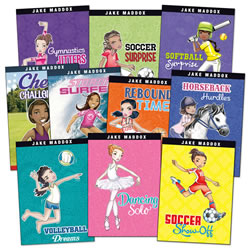
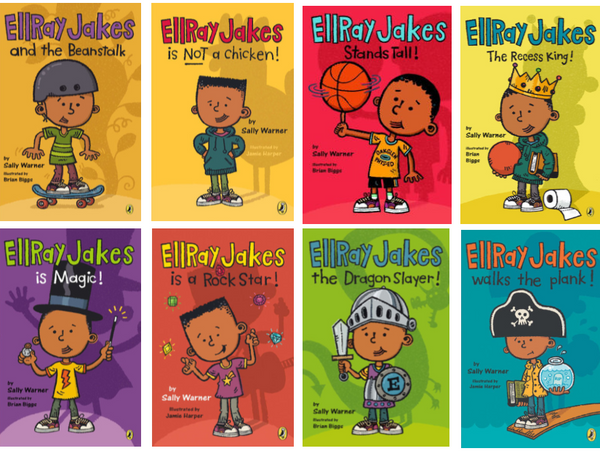
 Jake Maddox was the most popular,  He writes stories based around sports. The characters are engaged in some type of  sporting event.  There are some geared toward boys and  girls.  Once I introduced them,  I noticed the kids sharing them and wanting to go exchange them quicker than they were before being introduced to him. Ellray  Jakes  was another book that my boys loved.  It is also a series book about the every day shenanigans of a little boy.


Then  I looked for books with strong characters. The character Stink was the first character I introduced  to my class,  Oh boy, did they laugh as I read aloud how  a young kid was able to get  free stuff just by writing a letter. These books are about a little boy that always has something up his sleeve.  I loved reading them, The kids loved reading them.
.


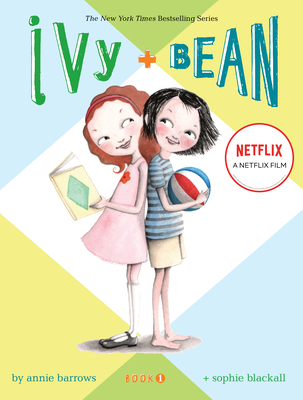
I then focused on my girls and found several books that they began to  explore and want more like them,  For instance these characters,  Mallory, Ivy Bean and Kylie Jean and Claudine.   All of  these characters have a string of books where they go through every day life with twist and turns.  


Series are my favorite to introduce to kids because it provides many titles focused around the character that keeps students reading. I share the series that I have read.  I created  a book recommendation wall where every week students are encourage recommend books to their peers using the form provided.  I print a copy of the cover and we post the form with the book cover on the board.  You will be amazed how engaged they become.  I make sure to  model how to write a blurb that will draw readers attention using the turning point.  Of course, without giving the story away. 


 My ultimate goal  however is to ignite a passion for Reading in everyone.  So I share books I've read,  adult and children. My students can see my passion and excitement, and it grabs their attention.  My hope with this post is to share some book title that I introduced to my students that helped with my unit on Character Development, but also to share some great book title to draw in your reluctant and unmotivated readers.  So now everybody has a book or available book choices, What;s  up next?  How to plan effective instruction using  learning progressions and Reading Bands. 
 Stay tuned.

Here is an image of the form I use.  I searched the Internet and found several.  However, I liked the simplicity of this particular form.


Saturday, January 21, 2017

Reading Matters

So you have your small groups, and now your ready to get reading rolling, but your noticing you have students that are not totally engaged or motivated to read. I have the perfect resources that will give you ideas on how to ramp up your reading instruction and get students actively involved.

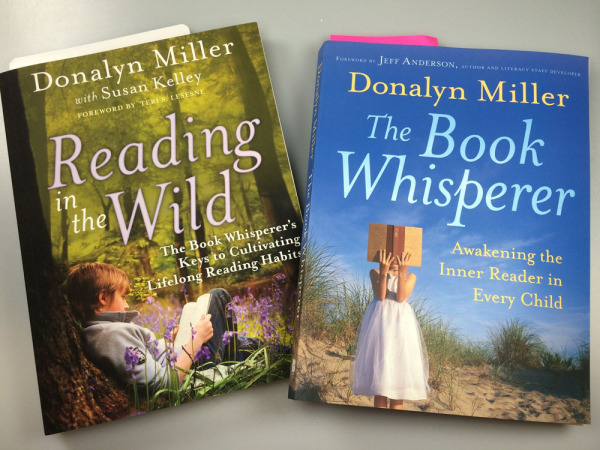
Donalyn Miller is one of my favorite authors she has two great books I think every teacher should read:

The Book Whisperer and Reading in the Wild
.

In Miller's books, she shares ideas on how to increase the volume that kids read and how to track their reading.  She shows you  how she to set up her  Reading workshop so it can be productive and inviting to students.  She provides ideas on how to introduce books to students, how to monitor student reading, how students can monitor their own reading as well as how to encourage the unenthusiastic reader to want to read. She talks of student choices and  inspires you to help students develop lifelong reading habits.


Another author that I truly enjoy reading is Jennifer Serravallo's,


In her book she provides information on how to develop strategic readers using mini lessons organized in this manner: Strategy, Teaching Tips, and Prompts. You can use the table of contents to go directly to the section/goal that you have set for your readers and, through several structured lessons, you model for students what they need to do to become strategic readers. It has lessons arranged by reading levels that make it a great tool to use for targeted or focused small group teaching.


Another book that I read every year is Reading with Meaning, depicted below.


Debbie Miller not only provides lessons and ideas on how to make the most out of Reading Workshop, she also provides Read Aloud titles to address the core reading skills that I feel readers should be able to use with any book they read: Determining importance, Inferring, Asking Questions, Synthesizing Information, and Visualizing, 

Last, but not least, Steven L. Layne's Igniting a Passion for Reading, which provides help to teachers in regards to motivating those hesitant readers or those that cringe at the mention of the word reading.  


Layne provides insight for teachers on how to tap into students interest, set goals, do book talks, and create an inviting reading environment within the classroom that will make students want to see what's in your class library.


These are just a few of the many books that I read year after year, to keep their ideas at the forefront of my planning and preparation for each school year. I am a lifelong reader of any and everything. So, up next, books that I gave book talks on to motivate my reluctant readers, and boy readers. Stay tuned!

Saturday, January 14, 2017

My Small Groups Are Set, Now What?

So now I have my small groups, so what do you do next you ask? Well that depends on the groups that you have created. As a teacher of 17 years, I have come to realize that the resources I use to prepare are important. Let me say that these are things that I as a teacher have found great resources to use to prepare for my small group instruction.


Guided Reading groups:

If I am teaching guided reading groups that are based on reading levels, the first thing I do is make sure that I am familiar with what each reader is expected to be able to do in order to process the text in which they are reading. I do this by studying the Reading Bands. The reading bands tell you what kids should be able to do in the level they are in and what they need to be able to do to move to the next level. I created a flip book of these bands and highlighted criteria that is important for readers to be successful. If you notice kids are not performing according to what the band states, I personally go back and look at the previous bands and see what the student is missing.

So once all this is accomplished book choice is important.  You want to try to rotate books in my opinion, start with a book that is too easy to work on fluency and decoding strategies, and then use their instructional level to teach skills necessary for students to be able to talk about the book, make inferences beyond the book, and be able to interact with the book. As a teacher,  I learned after the first few years to focus on one of those three areas not all of them. I also realized that you want to keep these groups as small as possible (3 to 6 students). However, six is a bit much to handle when you are trying to make sure to address individuals within a given time frame. This differs from teacher to teacher, school to school and even district to district. So once I determine which area to focus on, number of students, then use the Bands to determine which skill or strategy to focus on in that group for the day.

Here is an example of how you can set up or organize for guided reading groups:


Strategy Groups:

If I am teaching strategy groups, I can mix up reading levels and group kids according to need and each kid can use their own leveled book to practice and apply strategy.  That's what I love about small group teaching. I then make sure I have the necessary materials, things that I like to have readily available: small student dry erase boards, erasers, dry erase markers, index cards, sticky notes, magnetic letters, highlighters, pencils, paper, along with various charts: ABC,  Blends, Dipthongs, poems, an easel, chart paper, and whisper phones.

I often use poems as a Read Aloud during the lesson because they are short and you can find many that address a lot of the common word patterns that students struggle with during their independent reading. I make sure to have student books that represent the skill I am trying to teach as well to do a guided practice with students. Students are then expected to do the same with words that are in their individual books that are pre-selected by the teacher and represent the errors that this particular group of students are making.

Below is an example that is similar to one of the ways that I organized my word work materials when I taught Second grade, but now that I teach Fourth grade I create my buckets daily because the materials change daily.  This is just the way I did it.  So think about ways to organize your materials for your students to not only access during small group or when working independently as well.  


So, these are things that I would do as a reading teacher once I establish my small reading groups, whether Strategy or Guided. So, what's next? Well, how about some book talks, my perspective on some of the most effective professional development reading materials that help me enhance myself as a reading teacher.